Emperor penguins declared threatened species by US due to existential risk

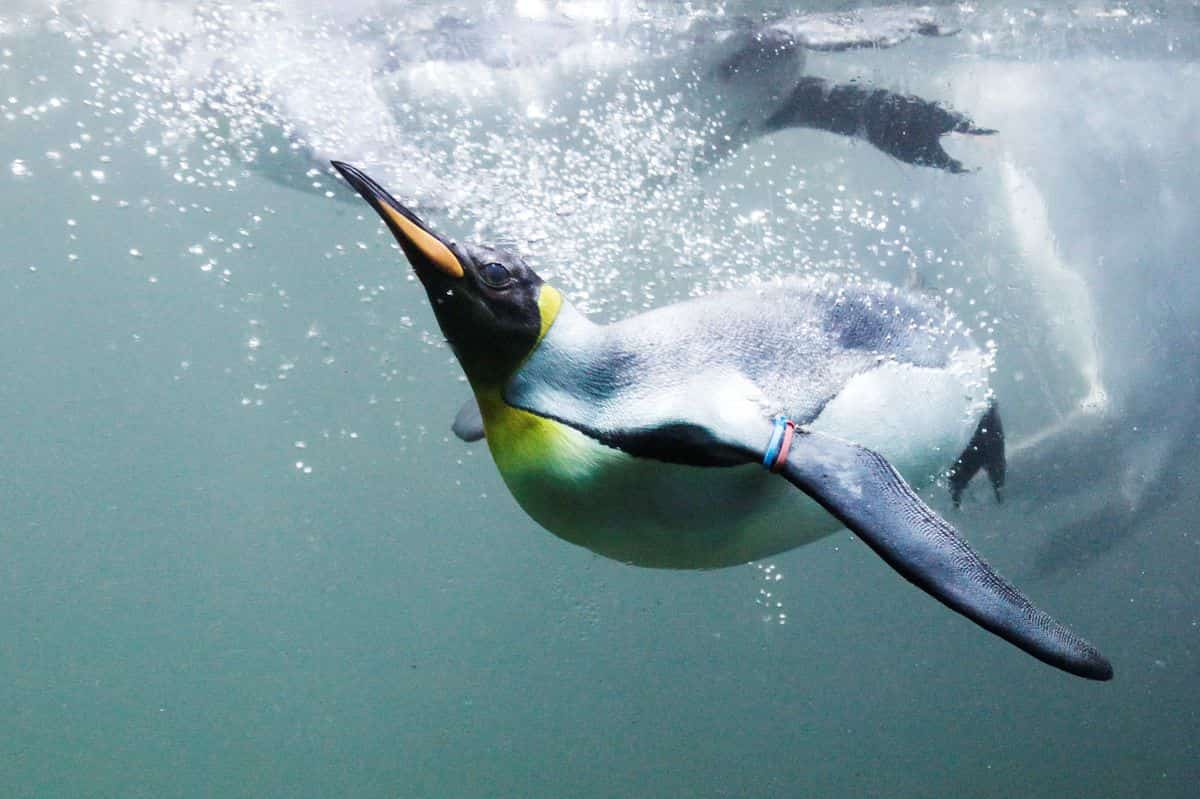
A king penguin swims in a pool at the zoo in Zurich August 15, 2012.
Due to the grave threat that the climate catastrophe poses to the birds, the emperor penguin—the tallest and largest penguin in the world—has been formally listed as a threatened species by the US government.
The US Fish and Wildlife Service declared on Tuesday that the penguins, which are native to Antarctica and threaten almost complete extinction as a result of the loss of sea ice over the course of this century, had been added to the list of endangered species.
“Climate change is having a profound impact on species around the world and addressing it is a priority for the administration,” said Martha Williams, director of the Fish and Wildlife Service. “The listing of the emperor penguin serves as an alarm bell but also a call to action.”

Emperor penguins, which can reach heights of 4 feet, are renowned for their extreme approaches to raising their young. Pairs of males and females alternately shield their eggs from the freezing elements while the other searches for food. On land, penguins move with an almost hilariously ambling pace, yet in the water and on the sea ice, where they hunt for fish and crustaceans, they are deft hunters.
Also Read:Bali offers 'second home' to tourists with $130,000 in bank account
The sea ice itself is crucial for the penguins' ability to rest, find shelter during their annual moult, and flee from predators. The penguins also depend on the waters surrounding and beneath the ice for food. However, as a result of global warming, sea ice is vanishing, endangering the penguins' habitat, while ocean acidification is diminishing the supply of krill, a key food source.
)
JP Nadda, Jitendra Singh meet Sonam Wangchuk at Medanta Hospital: Report
)
Trump announces 200% tariff on generic drugs: Here's what it means for 'Pharmacy of the World' India
&im=FitAndFill=(700,400))
Meet top 5 batters with most runs in India vs Zimbabwe T20Is
)
'Is that a back-up Trump?' Mysterious look-alike standing behind Donald Trump baffles netizens
)
US-Iran war cost hits $37.5 billion as Hegseth seeks $67 billion more for Pentagon
)
Sonam Wangchuk's connection with George Soros and Ford Foundation explained!
)
UP BTech gold medalist dies by suicide after failing in nearly 50 govt job attempts, leaves note for father
)
Salman Khan breaks silence on health concerns after viral Mumbai appearance
)
'George Soros playbook': Understanding the foreign funding network around Sonam Wangchuk
&im=FitAndFill=(700,400))
New OTT releases this week (July 20-26, 2026): Musafir Cafe, Adarsh Baal Vidyalaya, 72 Hours- 5 new titles coming on Netflix, Prime Video and more
&im=FitAndFill=(700,400))
2026 FIFA World Cup awards: Full list of Golden Boot, Golden Ball, Golden Glove and every major winner
)
Is Pentagon hiding missile shortage from Trump? US officials raise alarm over Iran war readiness
)
'Criticising him after two or three matches isn't justified': Sikandar Raza backs Vaibhav Sooryavanshi
&im=FitAndFill=(700,400))
FIFA World Cup 2026 team of the tournament: The best XI that ruled football’s biggest stage
)
'We acted immediately...': Indian PM Modi breaks silence on paper leaks as NEET protest, calls for Education Minister's resignation grows
)
Kaylee Hottle was unconscious: Shocking details from first responders revealed after teen star's death
)
'What is wrong...': Anna Hazare breaks silence on Sonam Wangchuk's protest, makes an appeal to Centre
)
FIFA 2026 | 'I am truly sorry': Argentina's Enzo Fernandez, who get red card in final, reacts to loss
&im=FitAndFill=(700,400))
Why US fighter jets use seamless bubble canopies compared to Russian jets
&im=FitAndFill=(700,400))
Why the F-22’s cockpit glass is thicker than a standard fighter jet
)
Student union leaders call off hunger strike at Jantar Mantar after civil society appeal, but protest continues
)
‘He's the architect of the genocide against Palestinians’: Mamdani repeats Netanyahu will be arrested if he visits US
&im=FitAndFill=(700,400))
World's top 7 most liveable cities in 2026 — Check where India and Pakistan stand
)
'Guru is the...': Indian Education Minister Dharmendra Pradhan shares message on education amid calls for his resignation
)
'Not permitted ...': IIT Roorkee issues gag order as students' protest intensifies
)
'This should not happen in a democracy': Shashi Tharoor slams detention of Rahul Gandhi, Priyanka Gandhi after protest outside PM Modi's residence
)
‘Centre had no interest in having a debate’: LoP Rahul Gandhi demands resignation of Dharmendra Pradhan, Amit Shah
)
FBI arrests alleged $547mn medicare fraud fugitive after 3-year global manhunt
A recurring recurrence of events like the 2016 Halley Bay sea ice breakup that resulted in the death of more than 10,000 chicks from the second-largest recorded emperor colony poses a concern due to changes taking place in the Antarctic. The chicks drowned because they were not yet able to swim properly. The colony still hasn't recovered.
Since the 1970s, the population of the Point Géologie emperor penguin colony, which was depicted in the movie March of the Penguins, has decreased by over 50 per cent.
(with inputs from agencies)