
&imwidth=800&imheight=600&format=webp&quality=medium "Federal judge orders removal of Trump's name from iconic Kennedy Center, blocks closure plan")
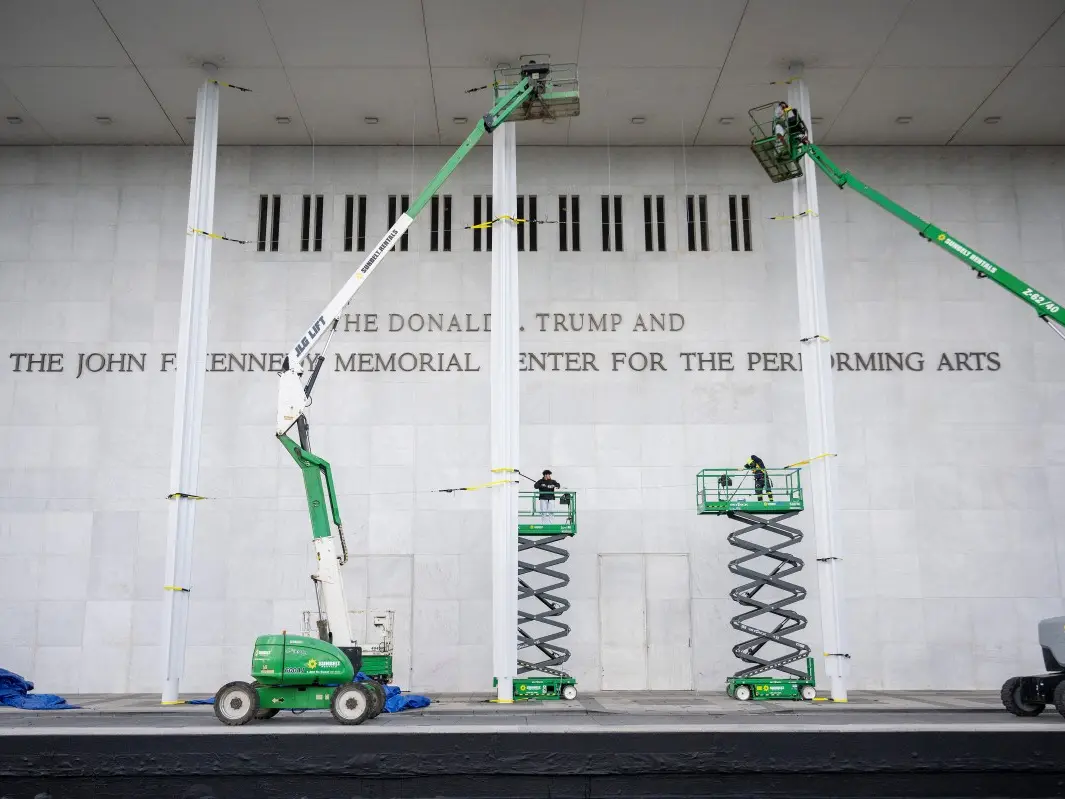
A federal judge on Friday (May 29) blocked plans to temporarily close the Kennedy Center for a lengthy renovation project and ruled that its board acted unlawfully when it voted to add President Donald Trump’s name to the iconic performing arts institution. US District Judge Casey Cooper determined that the law creating the Kennedy Center clearly establishes the venue as a memorial to President John F. Kennedy and does not allow the board to rename it without congressional approval.
“The law establishing the center makes crystal clear that the Center is to be named for President Kennedy, and it cannot bear any other formal name or public memorial based on the Board’s unilateral say-so." “Congress gave the Kennedy Center its name, and only Congress can change it,” Cooper wrote in his 94-page opinion. The judge ordered Kennedy Center officials to remove all signage containing Trump’s name within two weeks and update the institution’s website to eliminate references to ‘Trump Kennedy Center’ and the ‘Donald J. Trump and John F. Kennedy Memorial Center for the Performing Arts’.

Cooper further ruled that the center is permanently prohibited from displaying, installing, or maintaining any physical or digital signage on the Kennedy Center building or grounds that designates, suggests, or implies that the institution is named for any person other than President John F. Kennedy. Kennedy Center officials quickly signaled plans to appeal the ruling. “We are confident that on appeal the court will uphold the board’s will to recognize President Trump’s historic contributions to our nation’s cultural center,” Roma Daravi, the center’s vice president of public relations, said in a statement.
While blocking the closure, Cooper noted that renovation work on the aging facility may continue. However, he said the board failed to adequately evaluate how shutting down the venue for two years would affect its legal obligation to maintain ongoing public programming. “There is no evidence that the Board took account of its full range of statutory obligations in determining that a wholesale shuttering of the Kennedy Center was appropriate,” he wrote.
In short, there is no evidence before the Court that the Kennedy Center Board of Trustees considered how it would accomplish its full legislative mandate during the closure period. Daravi said officials would review the decision carefully but stressed that the building requires major repairs and modernisation. Planned upgrades include HVAC improvements, drainage remediation, soffit panel replacements, and theater seating enhancements.
Trending Stories
Here's how Trump reacted to the ruling
Lawsuit brought by a Democratic lawmaker
The ruling marks a significant victory for Democratic Representative Joyce Beatty, who filed the lawsuit after board members voted to rename the center. She later expanded her legal challenge when plans emerged to close the venue during a large-scale renovation. “Today’s ruling rightly affirms that this administration’s efforts to rename and close the center have no basis in law,” Beatty said in a statement.
“The Kennedy Center is an institution that belongs to the American people, not to Donald Trump.” Trump, who became chairman of the board last year, has overseen substantial leadership and programming changes at the center. Critics argue that those moves contributed to declining ticket sales and several high-profile artist withdrawals.
Under Trump’s leadership, the board approved plans late last year to rename the venue the Trump Kennedy Center. In March, trustees also voted to close the center beginning July 7 for a two-year renovation project. Beatty’s lawsuit argued that board members were not provided sufficient information before voting on the closure proposal. Although renovation documents were distributed shortly before the March board meeting, Cooper said they largely focused on renovation work already anticipated rather than justifying a complete shutdown.
The judge concluded that the decision to close the center had effectively been made before trustees formally voted. “The board’s vote on whether to close the center,” he wrote, was foreordained. Cooper cited evidence suggesting preparations for closure were underway months before Trump publicly announced the plan. “Whatever happened during that purported four-month incubation period, board input was, most evidently, an afterthought,” Cooper wrote.
“Trustees learned about the plan to close the center at the same time as the general public, through a social media post. Deprived of time and information, they had no meaningful opportunity to consider perhaps the most momentous decision in the Center’s lifetime since it opened in 1971.” “President Trump’s assurance that closure would be totally subject to board approval rings hollow, as he himself later admitted that it was a little late for the board to weigh in because the plan had already been announced.
To him, Board approval was just a minor detail, the judge added. Former employees and arts advocates had previously warned that a prolonged closure could result in the loss of performers, staff expertise, audience engagement, and donor support, potentially causing lasting damage to the institution.

