
&imwidth=800&imheight=600&format=webp&quality=medium "What is Pakistan’s 'except Israel' passport rule in spotlight amid Trump’s Israel recognition call?")
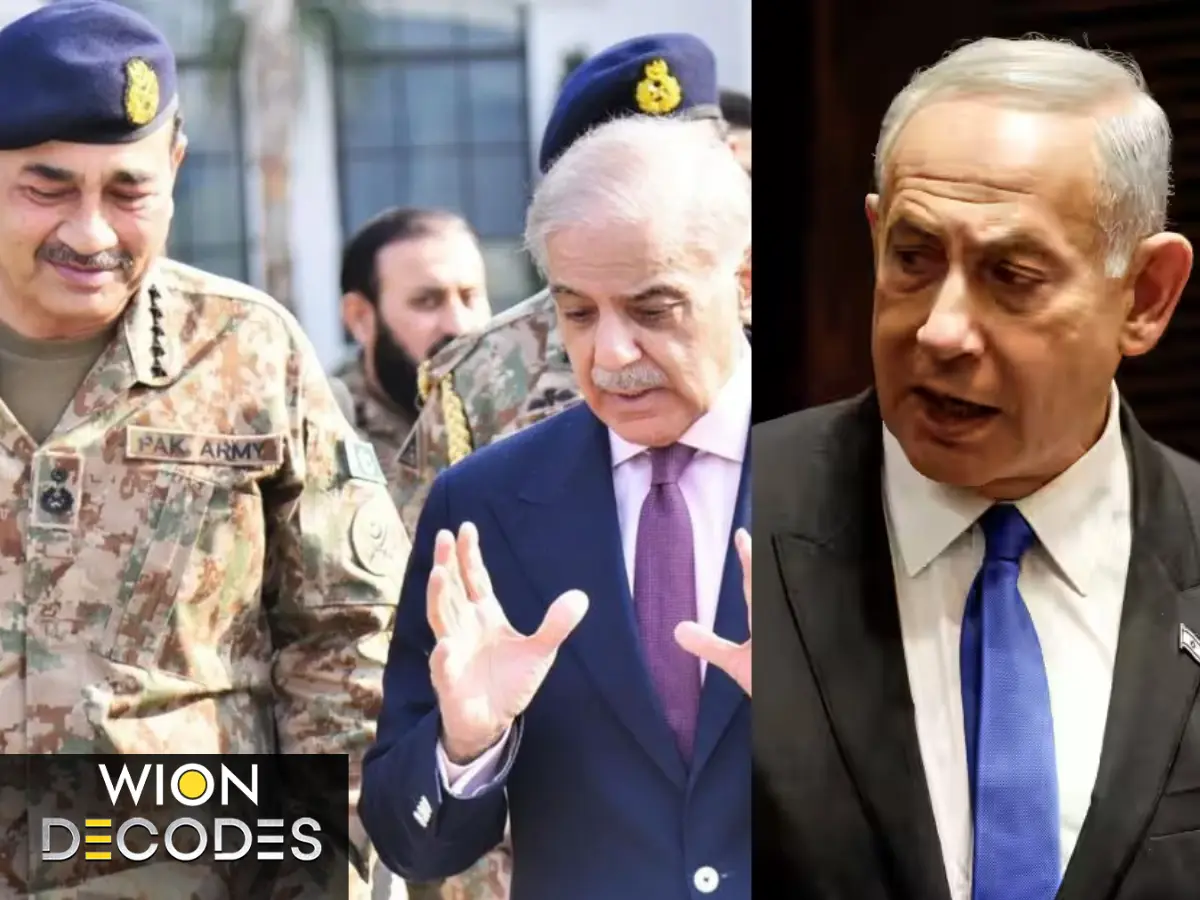
Pakistan is in a fix as US President Donald Trump said that Gulf nations including Pakistan will have to normalise ties with Israel before any peace deal between America and Iran. While Pakistan's Defence Minister Khawaja Asif firmly rejected Trump’s push for the Abraham Accords stating that the ideologies of the two countries are completely different, there has been no official statement on the same by the Pakistani government or its foreign affairs ministry. Asif in his rejection highlighted an important part about the country’s existing passport policy. He stated that Pakistan has a clear position of not recognising Israel, reflected in its travel documents.
Why Pakistan will be required to change its passport?
The minister was actually pointing out to the fact that Pakistan is the only country whose passports explicitly do not mention Israel as a valid destination. Each Pakistani passport includes a line stating that it is valid for all countries except Israel. If Pakistan were to join the Abraham Accords and establish diplomatic relations with Israel, this policy would have to change. Normalisation under the accords typically involves recognition of Israel, opening of embassies or consulates, as well as trade, travel, and visa agreements. In such a scenario, the existing restriction in Pakistani passports would no longer be valid. At present, the wording on the passport creates a clear contradiction—on one hand, diplomatic recognition would imply formal ties, while on the other, the passport restricts citizens from travelling to Israel. Removing or revising this clause would therefore become necessary if Pakistan shifts its foreign policy stance. Roughly, 10–15 percent of population holds an active passport in Pakistan. The cost of renew of all it would be huge.

Also Read: Trump, Asim Munir and Abraham Accords
However, it must be noted that Bangladesh previously included the same restriction in its passports after independence. In 2020, the government removed the “except Israel” clause, although officials maintained that the policy on Israel remained unchanged.
Trending Stories
)
FIFA 2026 | 'I am truly sorry': Argentina's Enzo Fernandez, who get red card in final, reacts to loss
)
'Guru is the...': Indian Education Minister Dharmendra Pradhan shares message on education amid calls for his resignation
)
FBI arrests alleged $547mn medicare fraud fugitive after 3-year global manhunt
&im=FitAndFill=(700,400))
2026 FIFA World Cup awards: Full list of Golden Boot, Golden Ball, Golden Glove and every major winner
&im=FitAndFill=(700,400))
Why US fighter jets use seamless bubble canopies compared to Russian jets
&im=FitAndFill=(700,400))
Why the F-22’s cockpit glass is thicker than a standard fighter jet
&im=FitAndFill=(700,400))
FIFA World Cup 2026 team of the tournament: The best XI that ruled football’s biggest stage
)
Sonam Wangchuk's connection with George Soros and Ford Foundation explained!
)
‘He's the architect of the genocide against Palestinians’: Mamdani repeats Netanyahu will be arrested if he visits US
&im=FitAndFill=(700,400))
World's top 7 most liveable cities in 2026 — Check where India and Pakistan stand
)
Kaylee Hottle was unconscious: Shocking details from first responders revealed after teen star's death
)
'We acted immediately...': Indian PM Modi breaks silence on paper leaks as NEET protest, calls for Education Minister's resignation grows
)
JP Nadda, Jitendra Singh meet Sonam Wangchuk at Medanta Hospital: Report
)
'Is that a back-up Trump?' Mysterious look-alike standing behind Donald Trump baffles netizens
)
'What is wrong...': Anna Hazare breaks silence on Sonam Wangchuk's protest, makes an appeal to Centre
)
‘Centre had no interest in having a debate’: LoP Rahul Gandhi demands resignation of Dharmendra Pradhan, Amit Shah
)
'Criticising him after two or three matches isn't justified': Sikandar Raza backs Vaibhav Sooryavanshi
)
'Not permitted ...': IIT Roorkee issues gag order as students' protest intensifies
&im=FitAndFill=(700,400))
New OTT releases this week (July 20-26, 2026): Musafir Cafe, Adarsh Baal Vidyalaya, 72 Hours- 5 new titles coming on Netflix, Prime Video and more
)
Is Pentagon hiding missile shortage from Trump? US officials raise alarm over Iran war readiness
)
Salman Khan breaks silence on health concerns after viral Mumbai appearance
)
'This should not happen in a democracy': Shashi Tharoor slams detention of Rahul Gandhi, Priyanka Gandhi after protest outside PM Modi's residence
)
Student union leaders call off hunger strike at Jantar Mantar after civil society appeal, but protest continues
)
UP BTech gold medalist dies by suicide after failing in nearly 50 govt job attempts, leaves note for father
)
Trump announces 200% tariff on generic drugs: Here's what it means for 'Pharmacy of the World' India
)
US-Iran war cost hits $37.5 billion as Hegseth seeks $67 billion more for Pentagon
)
'George Soros playbook': Understanding the foreign funding network around Sonam Wangchuk
&im=FitAndFill=(700,400))
Meet top 5 batters with most runs in India vs Zimbabwe T20Is
What Pakistan said on Trump's offer to normalise ties with Israel
Pakistan’s Defense Minister Khawaja Muhammad Asif rejected the idea saying it would be clash of “fundamental ideologies.” “How will you sit down with those people whose word cannot be trusted even for a single day?” Asif said, adding that Pakistani passports do not even include Israel’s name. In January 2026, when Pakistan joined Trump's Gaza Board of Peace, Pakistan “categorically ruled out” becoming a party to the Abraham Accords. The Pakistan Foreign Office said that Board of Peace and Abraham Accords should not be linked. Pakistan Foreign Office Spokesperson Tahir Andrabi said that it was a “misconception" relating the two.“Joining the Board of Peace has no connection with the Abraham Accords and does not represent any deviation from Pakistan’s principled position on Palestine,” Andrabi said.
What Trump said and what is Abraham Accords
Trump said that six Muslim-majority countries must join the Abraham Accords ahead of any deal between the US and Iran to end the war. Announced during the first term of Donald Trump, the Abraham Accords is an agreement under which diplomatic relationship is established between Israel and several Arab states, on the mediation of the United States. Trump said that expansion of the accords “should start with the immediate signing by Saudi Arabia and Qatar, and everybody else should follow suit.” He added that during discussions with leaders of Muslim and Arab states, he told them that “after all the work done by the United States to try and pull this very complex puzzle together, it should be mandatory that all of these Countries, at a minimum, simultaneously, sign onto the Abraham Accords.”

