
&imwidth=800&imheight=600&format=webp&quality=medium "WHO chief warns of ‘catastrophic collision’ of Ebola and conflict in DR Congo")
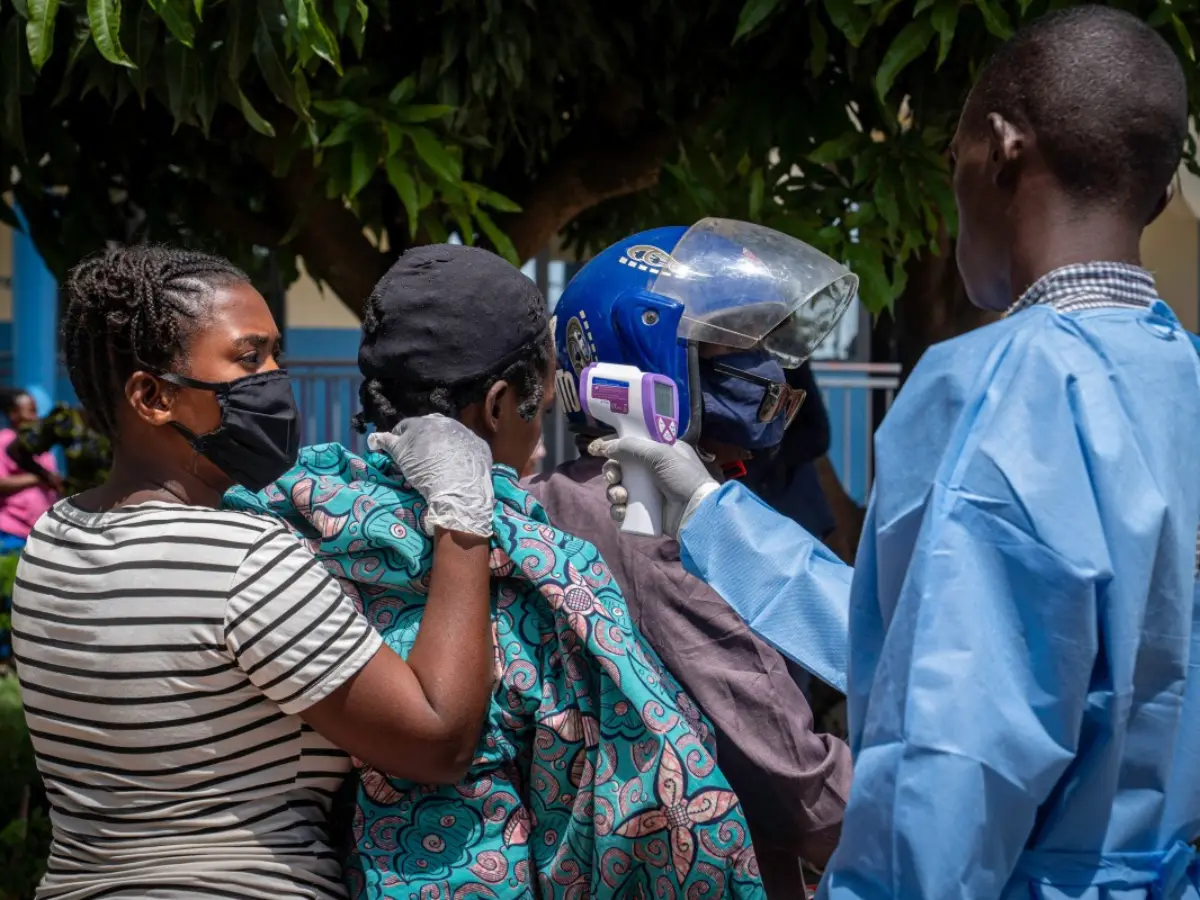
The World Health Organisation has sounded the alarm over a dangerous convergence of disease and warfare in the Democratic Republic of Congo, warning that an active Ebola outbreak in the country's eastern Ituri province is rapidly spiralling beyond the control of health responders. WHO Director-General Tedros Adhanom Ghebreyesus issued an urgent appeal Wednesday (May 27), calling for an immediate ceasefire in the conflict-torn region, where ongoing fighting has created near-impossible conditions for medical teams working to contain the deadly virus.
"Eastern DRC now faces a catastrophic collision of disease and conflict," Tedros wrote on X, stressing that the outbreak was “outpacing the response.”

Ebola, one of the world's most feared infectious diseases, carries a high fatality rate and spreads through direct contact with the blood or bodily fluids of infected individuals. Controlling an outbreak demands rapid case detection, contact tracing, isolation of patients, and safe burial practices all of which require stable, accessible conditions on the ground. In a conflict zone, each of those pillars becomes extraordinarily difficult to maintain.
Ituri province has long been one of DRC's most volatile regions, plagued by decades of ethnic violence and armed group activity. Health workers operating in such environments face constant threats to their safety, restricted movement, and disrupted supply chains for critical medical equipment and vaccines. Communities living under the shadow of armed conflict are also less likely to seek care or cooperate with health teams, allowing transmission chains to go undetected and unchecked.
The WHO chief's appeal underscores a grim reality that global health officials have confronted repeatedly in the DRC: disease outbreaks cannot be separated from the political and military contexts in which they occur. The country has battled more Ebola outbreaks than any other nation in the world, and experience has shown that insecurity remains the single greatest obstacle to an effective response.
Trending Stories
)
FIFA 2026 | 'I am truly sorry': Argentina's Enzo Fernandez, who get red card in final, reacts to loss
)
'Guru is the...': Indian Education Minister Dharmendra Pradhan shares message on education amid calls for his resignation
)
FBI arrests alleged $547mn medicare fraud fugitive after 3-year global manhunt
&im=FitAndFill=(700,400))
2026 FIFA World Cup awards: Full list of Golden Boot, Golden Ball, Golden Glove and every major winner
&im=FitAndFill=(700,400))
Why US fighter jets use seamless bubble canopies compared to Russian jets
&im=FitAndFill=(700,400))
Why the F-22’s cockpit glass is thicker than a standard fighter jet
&im=FitAndFill=(700,400))
FIFA World Cup 2026 team of the tournament: The best XI that ruled football’s biggest stage
)
Sonam Wangchuk's connection with George Soros and Ford Foundation explained!
)
‘He's the architect of the genocide against Palestinians’: Mamdani repeats Netanyahu will be arrested if he visits US
&im=FitAndFill=(700,400))
World's top 7 most liveable cities in 2026 — Check where India and Pakistan stand
)
Kaylee Hottle was unconscious: Shocking details from first responders revealed after teen star's death
)
'We acted immediately...': Indian PM Modi breaks silence on paper leaks as NEET protest, calls for Education Minister's resignation grows
)
JP Nadda, Jitendra Singh meet Sonam Wangchuk at Medanta Hospital: Report
)
'Is that a back-up Trump?' Mysterious look-alike standing behind Donald Trump baffles netizens
)
'What is wrong...': Anna Hazare breaks silence on Sonam Wangchuk's protest, makes an appeal to Centre
)
‘Centre had no interest in having a debate’: LoP Rahul Gandhi demands resignation of Dharmendra Pradhan, Amit Shah
)
'Criticising him after two or three matches isn't justified': Sikandar Raza backs Vaibhav Sooryavanshi
)
'Not permitted ...': IIT Roorkee issues gag order as students' protest intensifies
&im=FitAndFill=(700,400))
New OTT releases this week (July 20-26, 2026): Musafir Cafe, Adarsh Baal Vidyalaya, 72 Hours- 5 new titles coming on Netflix, Prime Video and more
)
Is Pentagon hiding missile shortage from Trump? US officials raise alarm over Iran war readiness
)
Salman Khan breaks silence on health concerns after viral Mumbai appearance
)
'This should not happen in a democracy': Shashi Tharoor slams detention of Rahul Gandhi, Priyanka Gandhi after protest outside PM Modi's residence
)
Student union leaders call off hunger strike at Jantar Mantar after civil society appeal, but protest continues
)
UP BTech gold medalist dies by suicide after failing in nearly 50 govt job attempts, leaves note for father
)
Trump announces 200% tariff on generic drugs: Here's what it means for 'Pharmacy of the World' India
)
US-Iran war cost hits $37.5 billion as Hegseth seeks $67 billion more for Pentagon
)
'George Soros playbook': Understanding the foreign funding network around Sonam Wangchuk
&im=FitAndFill=(700,400))
Meet top 5 batters with most runs in India vs Zimbabwe T20Is
Without a ceasefire and guaranteed humanitarian access, experts warn the outbreak could expand further, threatening neighbouring communities and potentially crossing international borders, transforming a regional crisis into a far broader public health emergency.

