Scientists warn allowing children to play with hand-me-down plastic toys could pose a risk to health

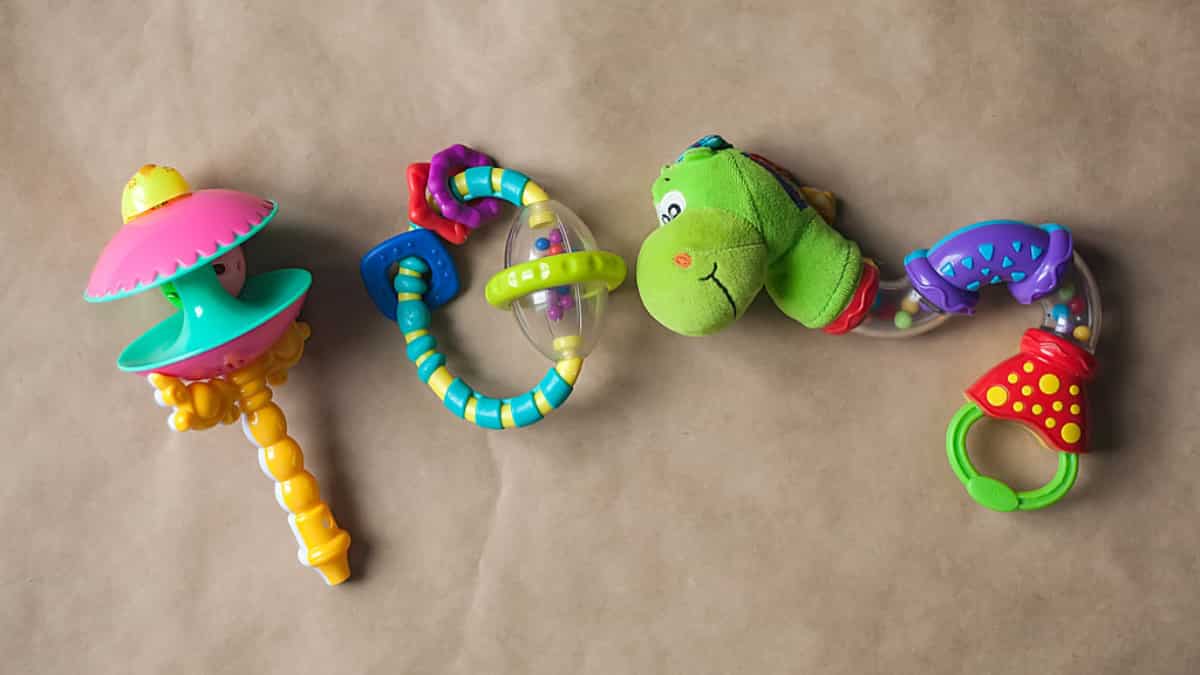
Old toys
In a new study conducted by the University of Gothenburg, scientists have found that letting children play with hand-me-down plastic toys could constitute a health risk.
For the study, researchers at the university tested a large number of old toys and dress-up items made of plastic.
After a detailed analysis, they found that 84 per cent of the items were found to contain toxins that can disrupt growth and development and reproductive capacities in children.

The research, published in the Journal of Hazardous Materials Advances, shows that these toxins are an obstacle to the circular economy in the future involving reuse and recycling.
According to Professor Bethanie Carney Almroth, the study's lead author, the hazardous chemicals that were discovered included phthalates and short-chain chlorinated paraffins used as plasticisers and flame retardants in toys.
)
Xi Jinping's new AI bloc: China launches 'World AI Body' with Pakistan and Russia in, India out
&im=FitAndFill=(700,400))
Why the S-400 uses solid rocket fuel instead of liquid fuel
)
Japan is selling a refrigerator to cool the human body for Rs 9 lakh. It is already a hit in Tokyo
)
Lip reader reveals what Donald Trump told every Spain and Argentina player after FIFA World Cup final during medal ceremony
)
Sonam Wangchuk's connection with George Soros and Ford Foundation explained!
)
'There is no need for...': PM Modi takes a veiled dig at Rahul Gandhi, sends big message amid Parliament March
)
FACT CHECK: Was Abhijit Dipke detained during CJP's Parliament march? Here's what police say
)
UP BTech gold medalist dies by suicide after failing in nearly 50 govt job attempts, leaves note for father
)
Jail over Khamenei post: J&K youth returns home after 3 months in Saudi custody
)
'Now come to us': CJP resumes protest after Parliament march violence, calls meeting with Nadda 'waste of time'
)
Salman Khan breaks silence on health concerns after viral Mumbai appearance
)
'George Soros playbook': Understanding the foreign funding network around Sonam Wangchuk
)
Indus treaty can no longer function in its current form, says India; plans 5,500 mw of new J&K hydro projects
&im=FitAndFill=(700,400))
New OTT releases this week (July 20-26, 2026): Musafir Cafe, Adarsh Baal Vidyalaya, 72 Hours- 5 new titles coming on Netflix, Prime Video and more
&im=FitAndFill=(700,400))
2026 FIFA World Cup awards: Full list of Golden Boot, Golden Ball, Golden Glove and every major winner
&im=FitAndFill=(700,400))
FIFA World Cup 2026 team of the tournament: The best XI that ruled football’s biggest stage
)
'What is wrong...': Anna Hazare breaks silence on Sonam Wangchuk's protest, makes an appeal to Centre
)
Truck loaded with stones, metro stations closed: What's happening at Jantar Mantar now
&im=FitAndFill=(700,400))
Why US fighter jets use seamless bubble canopies compared to Russian jets
&im=FitAndFill=(700,400))
Why the F-22’s cockpit glass is thicker than a standard fighter jet
)
Student union leaders call off hunger strike at Jantar Mantar after civil society appeal, but protest continues
)
'Guru is the...': Indian Education Minister Dharmendra Pradhan shares message on education amid calls for his resignation
)
'We acted immediately...': Indian PM Modi breaks silence on paper leaks as NEET protest, calls for Education Minister's resignation grows
When Professor Bethanie Carney Almroth compared new and old toys she found out that the latter had concentrations of phthalates totalling more than 40 per cent of the weight of the toy.
Explaining that the study indicates that reuse and recycling are not always automatically a good thing, Environmental Economist at the University of Gothenburg Daniel Slunge said ''The transition to a more circular economy requires bans and other policy measures that get rid of hazardous chemicals from plastic and other materials.''
''Although the Toy Safety Directive has been crucial in reducing the incidence of hazardous chemicals in toys, it has only been applicable to new toys, not old ones,'' he added.
It comes after the European Parliament adopted a Circular Economy Action Plan to discourage wasteful behaviour that drains the Earth's finite resources.
In an attempt to protect the health and safety of children, the EU legislation regulated the permissible quantities of a number of chemical substances found in toys.
Under the Toy Safety Directive, the permissible limit values for new toys are 0.15 per cent by weight for short-chain chlorinated paraffins and 0.1 per cent by weight for phthalates.
Watch WION's live TV here: