Dream job alert! This Antarctic post office is hiring and the profile requires counting penguins

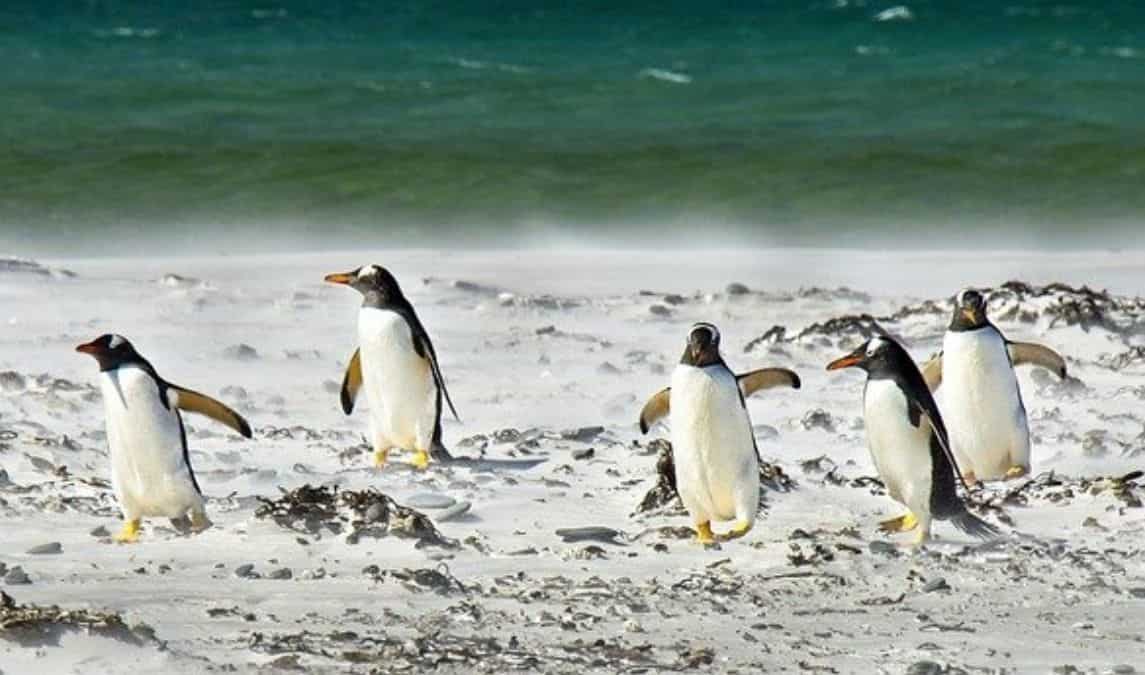
Port Lockroy post office
The UK Antarctic Heritage Trust is hiring staff for its post office and museum where the winning candidates will spend five months on an Antarctic island.
On the serene island, the candidates who will get the job will be surrounded by some colleagues and thousands of penguins. In fact, counting and monitoring cute flightless birds are part of the job.
For the first time since the start of the coronavirus (COVID-19) pandemic, UK Antarctic Heritage Trust is hiring a seasonal team to staff its Port Lockroy post office on Goudier Island in the Antarctic Peninsula, CBC reported.

On its website, the site stated: "We are now recruiting for a new team to be based at Port Lockroy in Antarctica for the 2022/23 season. The roles are: Base Leader, Shop Manager, and General Assistant."
ALSO READ |To 'decolonise' curriculum, famous English novelist Jane Austen dropped from a university
"Below you can find the official application forms as well as information packs on the roles available and how to apply via our HR online portal," it added.
&im=FitAndFill=(700,400))
Why the S-400 uses solid rocket fuel instead of liquid fuel
)
'Guru is the...': Indian Education Minister Dharmendra Pradhan shares message on education amid calls for his resignation
)
Salman Khan breaks silence on health concerns after viral Mumbai appearance
)
Indus treaty can no longer function in its current form, says India; plans 5,500 mw of new J&K hydro projects
&im=FitAndFill=(700,400))
New OTT releases this week (July 20-26, 2026): Musafir Cafe, Adarsh Baal Vidyalaya, 72 Hours- 5 new titles coming on Netflix, Prime Video and more
)
'What is wrong...': Anna Hazare breaks silence on Sonam Wangchuk's protest, makes an appeal to Centre
)
Student union leaders call off hunger strike at Jantar Mantar after civil society appeal, but protest continues
)
'We acted immediately...': Indian PM Modi breaks silence on paper leaks as NEET protest, calls for Education Minister's resignation grows
&im=FitAndFill=(700,400))
Why US fighter jets use seamless bubble canopies compared to Russian jets
)
'Now come to us': CJP resumes protest after Parliament march violence, calls meeting with Nadda 'waste of time'
)
UP BTech gold medalist dies by suicide after failing in nearly 50 govt job attempts, leaves note for father
&im=FitAndFill=(700,400))
FIFA World Cup 2026 team of the tournament: The best XI that ruled football’s biggest stage
&im=FitAndFill=(700,400))
Why the F-22’s cockpit glass is thicker than a standard fighter jet
)
'George Soros playbook': Understanding the foreign funding network around Sonam Wangchuk
&im=FitAndFill=(700,400))
Meet top 5 batters with most runs in India vs Zimbabwe T20Is
&im=FitAndFill=(700,400))
2026 FIFA World Cup awards: Full list of Golden Boot, Golden Ball, Golden Glove and every major winner
)
Xi Jinping's new AI bloc: China launches 'World AI Body' with Pakistan and Russia in, India out
)
Sonam Wangchuk's connection with George Soros and Ford Foundation explained!
)
Truck loaded with stones, metro stations closed: What's happening at Jantar Mantar now
)
Japan is selling a refrigerator to cool the human body for Rs 9 lakh. It is already a hit in Tokyo
)
FACT CHECK: Was Abhijit Dipke detained during CJP's Parliament march? Here's what police say
)
'There is no need for...': PM Modi takes a veiled dig at Rahul Gandhi, sends big message amid Parliament March
)
Jail over Khamenei post: J&K youth returns home after 3 months in Saudi custody
The site mentioned that the candidate must have an existing right to work in the UK as they are not able to sponsor visas. They will be asked to provide documentation at the interview stage to prove the right to work.
The documentation may include passports, indefinite leave to remain, visas or any other supporting documents and in case candidates are unable to provide this evidence, the application will not be considered.
ALSO READ |'Unaccounted pregnancy' & heart palpitations: Pentagon releases new UFO information
As quoted by CBC, Vicky Inglis, one of the station's previous postmasters, said that it is an opportunity of a lifetime. "We did have to dig our way [through the snow] to get access for the first time when we arrived," Inglis said.
"We've got no flush toilets and nothing like that — none of the modern luxuries that we're used to," added Inglis, who worked at Port Lockroy during the 2019-2020 summer season.
The media outlet mentioned that workers have to count penguins and other wildlife for the British Antarctic Survey. Inglis told that part of his job was to count the penguins and their eggs for a long-running population monitoring program.