Scientists successfully sequence genome of Pompeii's victims for the first time

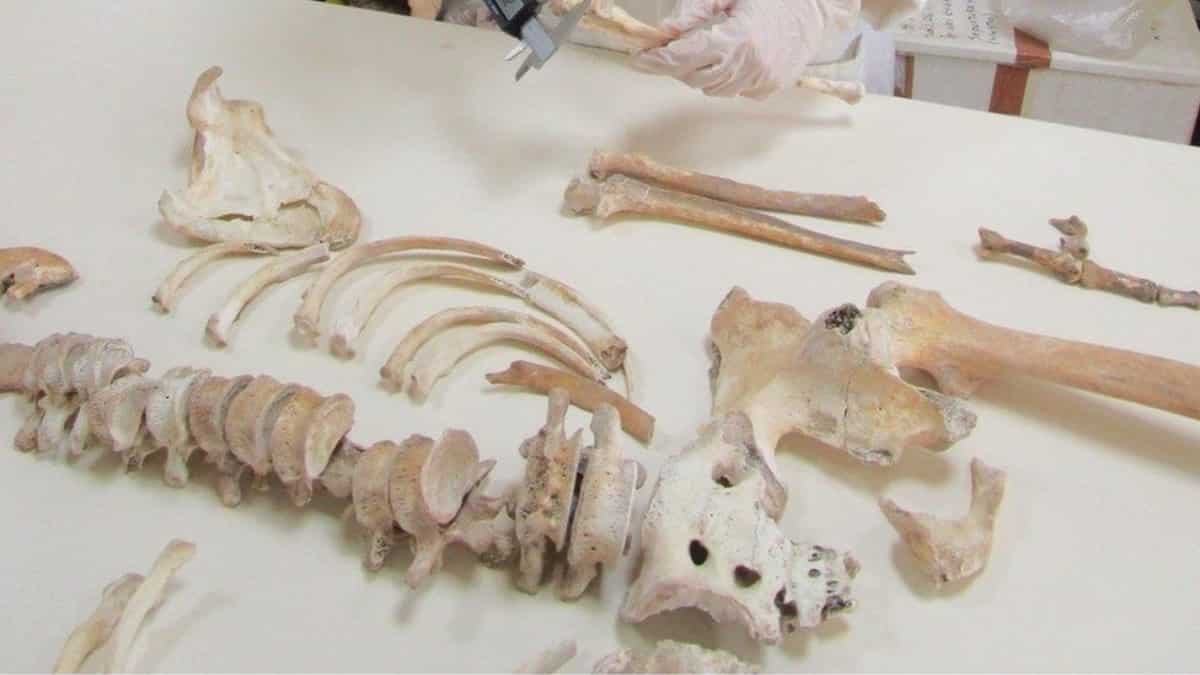
Remains found in Pompeii
In a first, scientists have successfully sequenced the genome of Pompeii's victims from the remains of a man and woman buried who were buried when the Roman city was engulfed in volcanic ash.
The study, which has been published in the journal Scientific Reports, has analysed the first "Pompeian human genome".
Encased in time-hardened ash, the DNA was preserved in bodies that were first discovered in 1933 inside Casa del Fabbro, or 'The Craftsman's House.'

Almost as though they were having lunch when the eruption occurred on 24 August 79AD, both bodies were slumped in the corner of the dining room.
Now scientists at the University of Copenhagen were only able to sequence the entire genome from the man’s remains due to gaps in the sequences obtained from the woman.
)
Xi Jinping's new AI bloc: China launches 'World AI Body' with Pakistan and Russia in, India out
&im=FitAndFill=(700,400))
Why the S-400 uses solid rocket fuel instead of liquid fuel
)
Explained: Why Rodri won the FIFA World Cup Golden Ball over Lionel Messi
)
Japan is selling a refrigerator to cool the human body for Rs 9 lakh. It is already a hit in Tokyo
)
Lip reader reveals what Donald Trump told every Spain and Argentina player after FIFA World Cup final during medal ceremony
)
‘Iran can survive sanctions, but can’t truly live’: Dy FM warns of economic cost of war
)
Sonam Wangchuk's connection with George Soros and Ford Foundation explained!
)
'There is no need for...': PM Modi takes a veiled dig at Rahul Gandhi, sends big message amid Parliament March
)
FACT CHECK: Was Abhijit Dipke detained during CJP's Parliament march? Here's what police say
)
‘Netanyahu will not be arrested in any way, shape, or form in US’: Trump’s counter to Mamdani
)
UP BTech gold medalist dies by suicide after failing in nearly 50 govt job attempts, leaves note for father
)
Jail over Khamenei post: J&K youth returns home after 3 months in Saudi custody
)
'Now come to us': CJP resumes protest after Parliament march violence, calls meeting with Nadda 'waste of time'
)
Salman Khan breaks silence on health concerns after viral Mumbai appearance
)
'George Soros playbook': Understanding the foreign funding network around Sonam Wangchuk
)
Indus treaty can no longer function in its current form, says India; plans 5,500 mw of new J&K hydro projects
&im=FitAndFill=(700,400))
New OTT releases this week (July 20-26, 2026): Musafir Cafe, Adarsh Baal Vidyalaya, 72 Hours- 5 new titles coming on Netflix, Prime Video and more
&im=FitAndFill=(700,400))
2026 FIFA World Cup awards: Full list of Golden Boot, Golden Ball, Golden Glove and every major winner
&im=FitAndFill=(700,400))
FIFA World Cup 2026 team of the tournament: The best XI that ruled football’s biggest stage
)
'What is wrong...': Anna Hazare breaks silence on Sonam Wangchuk's protest, makes an appeal to Centre
)
Truck loaded with stones, metro stations closed: What's happening at Jantar Mantar now
&im=FitAndFill=(700,400))
Why US fighter jets use seamless bubble canopies compared to Russian jets
&im=FitAndFill=(700,400))
Why the F-22’s cockpit glass is thicker than a standard fighter jet
)
Student union leaders call off hunger strike at Jantar Mantar after civil society appeal, but protest continues
)
'Guru is the...': Indian Education Minister Dharmendra Pradhan shares message on education amid calls for his resignation
)
Tulsi Gabbard's brother Batarti accused of luring children to hotel room in Hawaii
)
'We acted immediately...': Indian PM Modi breaks silence on paper leaks as NEET protest, calls for Education Minister's resignation grows
“Being charcoal, fragile and evanescent, which could not last a long time, it is more than likely that it was written in October 79 AD,” said Massimo Osanna, head of the Pompeii site.
Gabriele Scorrano, from the Lundbeck GeoGenetics centre in Copenhagen, who led the study, "It was all about the preservation of the skeletons."
"It's the first thing we looked at, and it looked promising, so we decided to give [DNA extraction] a shot."
"New sequencing machines can [read] several whole genomes at the same time," he said.
According to Serena Viva, an anthropologist at the University in Salento who was on the study’s team, “This could have been the reason for which they waited for it all to finish, maybe in the security of their home, compared to other victims who were fleeing and whose remains were found in open spaces.”
“In the future many more genomes from Pompeii can be studied,” said Viva.
“The victims of Pompeii experienced a natural catastrophe, a thermal shock, and it was not known that you could preserve their genetic material. This study provides this confirmation, and that new technology on genetic analysis allows us to sequence genomes also on damaged material.”
(With inputs from agencies)
Watch WION's live TV here: