&imwidth=800&imheight=600&format=webp&quality=medium "Mosque built illegally by Pakistanis in Japan, inaugurated by envoy, faces demolition")
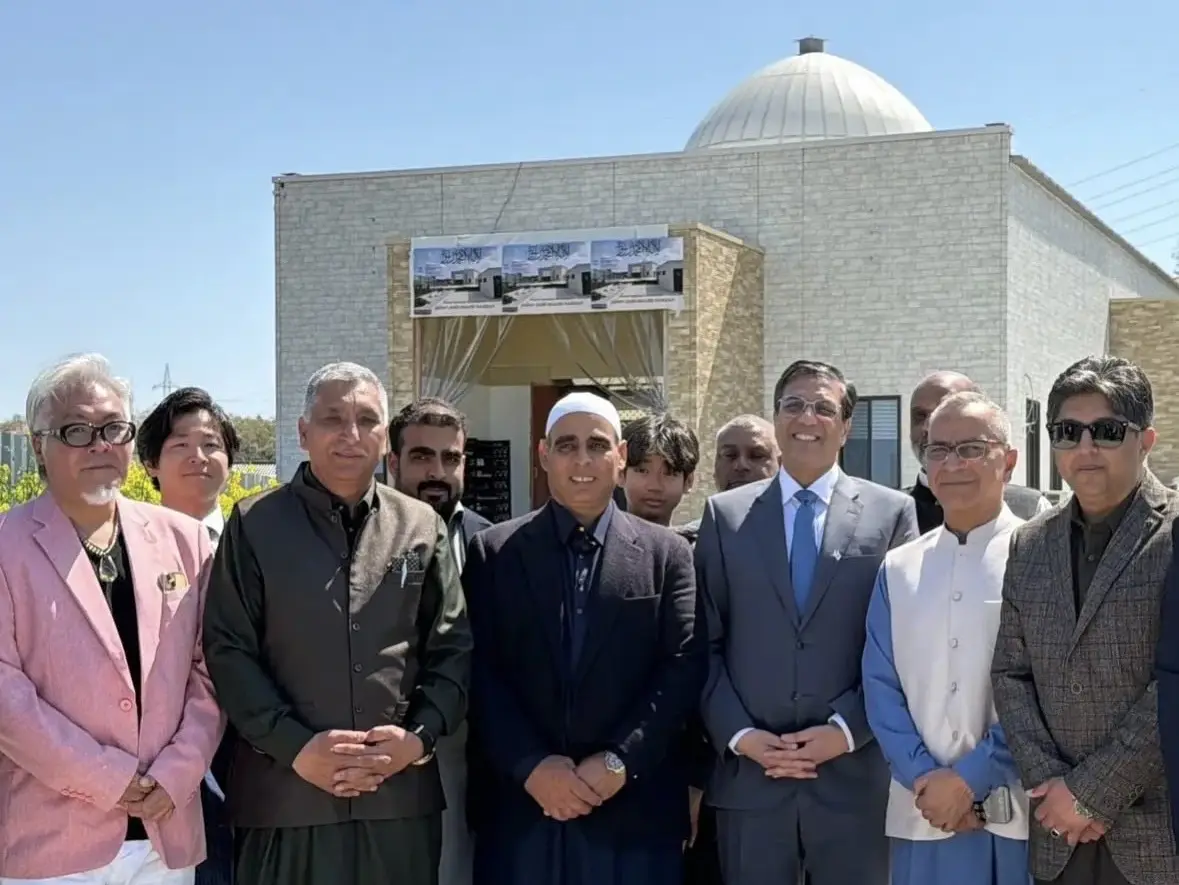
Pakistanis living in Japan have constructed a mosque in Kawagoe city, but without taking the necessary approvals from the concerned authorities that render it illegal. And to top it all off, the mosque was inaugurated in the presence of Pakistan’s Ambassador to Japan, Abdul Hameed, in April.
After the reality dawned that the structure had been built without the necessary approvals from local authorities and is hence illegal, the Pakistani mission issued a clarification. Locals are now demanding that the structure be razed.
The mosque is now facing the possibility of demolition after local authorities determined that it had been constructed without the permissions required under Japanese law.

‘Specific permissions are needed under City Planning Act’
Kawagoe City Hall, the municipal government administrative centre of the city, has made its position clear regarding the illegally built mosque. “The building (mosque) was constructed in an urban development control area where construction is generally prohibited unless specific permissions are secured under the City Planning Act,” an official statement by the City Hall said.
Trending Stories
&im=FitAndFill=(700,400))
FIFA World Cup 2026 awards race: Who are Golden Boot, Golden Ball and Golden Glove contenders ahead of the final
)
Did Iran secretly ship 70 million barrels of oil to China? Report claims $6 billion crude exported before blockade restored
)
'George Soros playbook': Understanding the foreign funding network around Sonam Wangchuk
)
'Could be bombed at any moment': What Iran's Araghchi told Trump envoy Witkoff during negotiations
&im=FitAndFill=(700,400))
Why the F-22’s tail fins are canted to minimize its radar footprint
)
Sonam Wangchuk's connection with George Soros and Ford Foundation explained!
&im=FitAndFill=(700,400))
FIFA World Cup 2026: 5 football stars who went viral on social media during the tournament
)
'Chalo Sansad' march today: Section 163 in force, Delhi Police remove barricades; unfazed Dharmendra Pradhan meets NEET topper
)
'What is wrong...': Anna Hazare breaks silence on Sonam Wangchuk's protest, makes an appeal to Centre
&im=FitAndFill=(700,400))
IN PICS | Top 10 unforgettable moments from FIFA World Cup 2026
)
FIFA 2026: BTS lights up World Cup final halftime show with 'Dynamite' performance
)
Truck loaded with stones, metro stations closed: What's happening at Jantar Mantar now
)
UK court denies bail to Indian merchant navy captain held in Russian oil tanker case
&im=FitAndFill=(700,400))
Global air power ranking 2026: India surpasses China
&im=FitAndFill=(700,400))
Why the F-22’s cockpit glass is thicker than a standard fighter jet
)
Argentina's racism problem: How football chants reflect a deeper historical legacy
&im=FitAndFill=(700,400))
2026 FIFA World Cup awards: Full list of Golden Boot, Golden Ball, Golden Glove and every major winner
)
Karoline Leavitt to be US Vice President when Usha Vance gives birth? JD Vance says...
)
JD and Usha Vance welcome fourth child: Who serves as acting US vice president during Vance's paternity leave?
)
Xi Jinping's new AI bloc: China launches 'World AI Body' with Pakistan and Russia in, India out
)
Student union leaders call off hunger strike at Jantar Mantar after civil society appeal, but protest continues
)
Imran Khan's sister links India-Pakistan 2025 conflict to Israel recognition plans
)
Homer's Iliad written before The Odyssey found inside an Egyptian mummy
)
Older than Himalayas: 85mn-year-old Kewra plant reached India 24mn years ago, fossil discovery in Assam shows
)
US strikes Iran, sirens heard in Kuwait, one American soldier killed in Iraq: What's happening in West Asia
)
BTS at FIFA 2026: Check the halftime show timings for India and across the world
)
'There is no need for...': PM Modi takes a veiled dig at Rahul Gandhi, sends big message amid Parliament March
“The building in question was constructed without the city’s permission,” the statement added.
Authorities have also received requests from relevant parties to demolish the mosque, and the proposal has been accepted for review, according to the City Hall statement.
Also Read: Trump picks loyalist Bill Pulte as acting director of national intelligence to replace Tulsi Gabbard
Pakistani embassy dissociates itself from illegal project
After it was found out that the mosque was built illegally, the Pakistani embassy in Tokyo found itself in a piquant situation and clarified that it had no connection with projects that violate Japanese laws.
In two carefully worded statements, the Pakistan embassy urged members of the Pakistani community to fully comply with Japanese regulations, particularly when constructing places of worship.
“The Embassy of Pakistan earnestly requests and emphasises to the Pakistani community residing in Japan that they fully comply with Japanese laws in all matters, particularly with regard to the construction of places of worship. No construction project may be initiated without obtaining the necessary permits from local governments,” the Pakistan Embassy said in a June 1 post on X.
‘Ambassador was told all approvals under law taken’
The embassy claimed that Ambassador Abdul Hameed attended the mosque’s inauguration after being informed that all necessary approvals required under Japanese law had been obtained.
In a separate statement on May 31, the Pakistani mission in Japan said that no construction project should begin without securing the required permits from local authorities.
‘Embassy of Pakistan has no connection to any such projects’
“The Embassy of Pakistan has no connection to any such projects, especially those that do not comply with the laws of local governments. This includes the event held in Kawagoe on April 3, 2026, for which the Ambassador of Pakistan accepted the invitation on the basis of information that all required permits in accordance with Japanese law had been obtained,” the Pakistani Embassy said.
Kawagoe authorities are coordinating with relevant agencies before deciding on further action. They also acknowledged that they cannot confirm whether adequate explanations were provided to nearby residents before construction began, which adds another layer to the controversy.
In Japan, community consultation is often regarded as an important part of development projects, particularly when new structures could affect neighbourhoods.
Now, whether the structure stays or is demolished will depend on the city council’s decision.