&imwidth=800&imheight=600&format=webp&quality=medium "PM Balendra Shah’s ‘Nepal encroached Indian territory too’ remark draws backlash; foreign ministry clarifies")
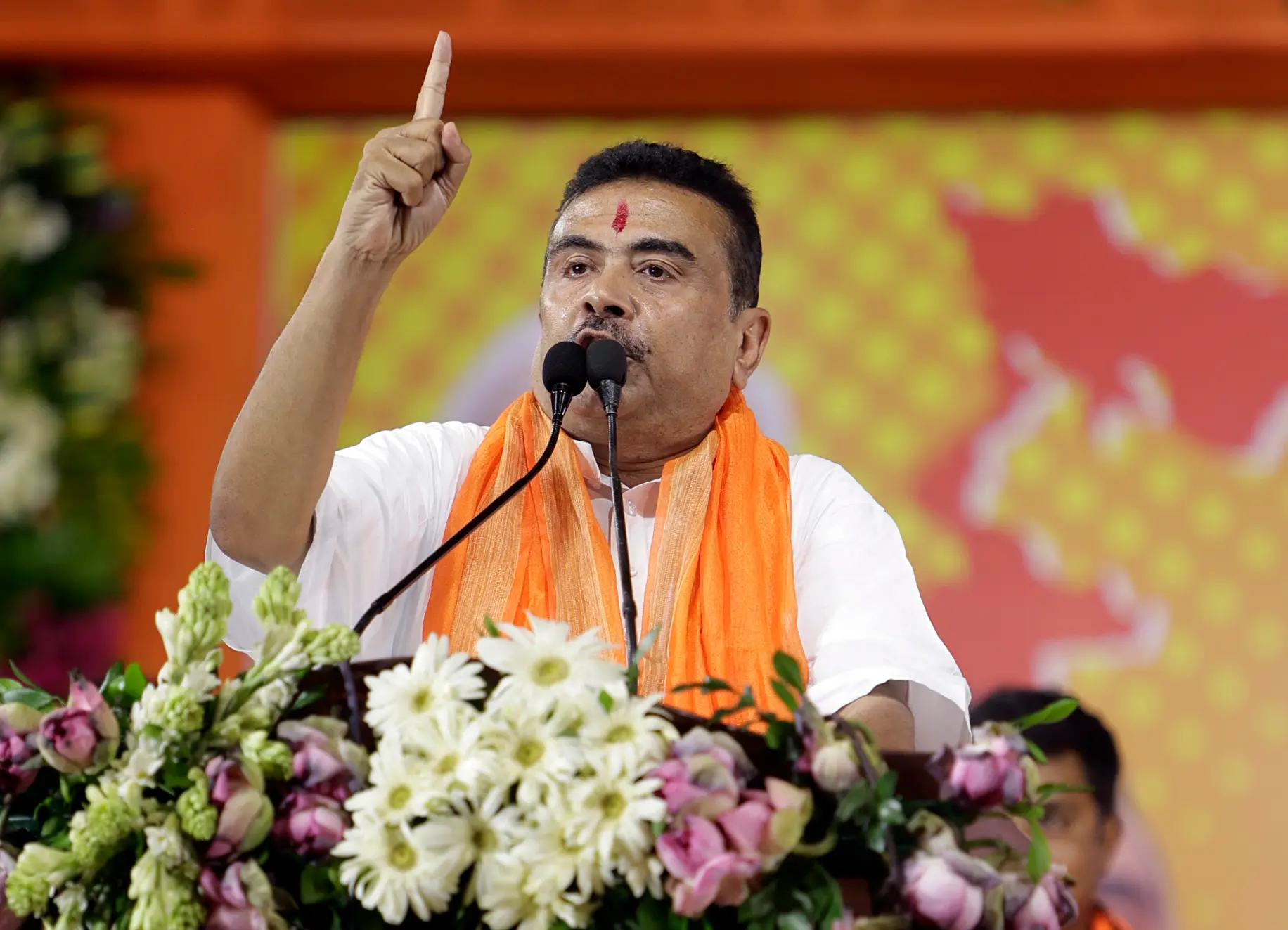
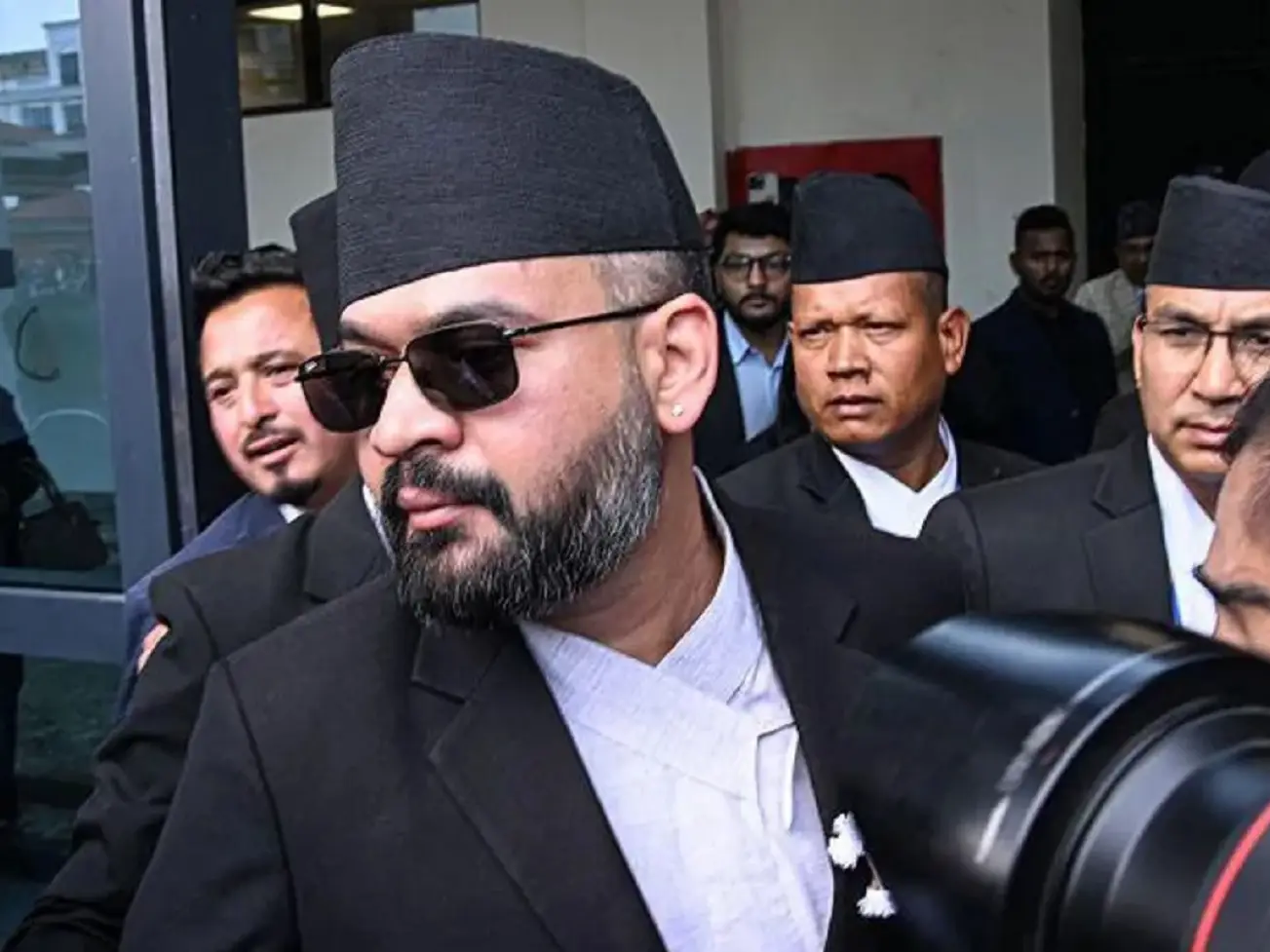
Nepal Prime Minister Balendra ‘Balen’ Shah said in the parliament on Sunday that both India and Nepal had encroached on each other’s territory, drawing strong protests from the opposition and renewing focus on the long-running Lipulekh-Kalapani border dispute.
Shah, the Himalayan country’s youngest prime minister, was addressing Parliament for the first time since assuming office earlier this year.
Shah acknowledged that the border dispute involving Lipulekh, Limpiyadhura and Kalapani remains a sore point in bilateral ties and struck a conciliatory note, saying both countries should seek the help of historians, surveyors and experts to resolve the issue.

“You will be surprised to know a fact that I have learnt recently, only after becoming prime minister. India has not only encroached Nepali territory, but Nepal has also encroached Indian territory in many places,” the 35-year-old leader said.
“Both countries should study the facts and sit together as friends and resolve the issue,” he added.
Trending Stories
)
Xi Jinping's new AI bloc: China launches 'World AI Body' with Pakistan and Russia in, India out
&im=FitAndFill=(700,400))
Why the S-400 uses solid rocket fuel instead of liquid fuel
)
CORTIS' first-ever concert sparks backlash over repeated songs and short setlist
)
Explained: Why Rodri won the FIFA World Cup Golden Ball over Lionel Messi
)
Japan is selling a refrigerator to cool the human body for Rs 9 lakh. It is already a hit in Tokyo
)
Revealed! The hidden ritual Marc Cucurella performed before Spain won the FIFA World Cup
)
Mumbai court gives life sentences to 44 Somali pirates despite mercy plea
)
US-Iran conflicts: Houthis announce maritime blockade on Saudi Arabia, Iran attacks MQ-9 drone hangar | Gravitas
)
‘Iran can survive sanctions, but can’t truly live’: Dy FM warns of economic cost of war
)
Sonam Wangchuk's connection with George Soros and Ford Foundation explained!
)
‘Netanyahu will not be arrested in any way, shape, or form in US’: Trump’s counter to Mamdani
)
FACT CHECK: Was Abhijit Dipke detained during CJP's Parliament march? Here's what police say
)
'There is no need for...': PM Modi takes a veiled dig at Rahul Gandhi, sends big message amid Parliament March
)
UP BTech gold medalist dies by suicide after failing in nearly 50 govt job attempts, leaves note for father
)
'Could be bombed at any moment': What Iran's Araghchi told Trump envoy Witkoff during negotiations
)
Jail over Khamenei post: J&K youth returns home after 3 months in Saudi custody
)
Salman Khan breaks silence on health concerns after viral Mumbai appearance
)
'George Soros playbook': Understanding the foreign funding network around Sonam Wangchuk
)
Indus treaty can no longer function in its current form, says India; plans 5,500 mw of new J&K hydro projects
&im=FitAndFill=(700,400))
2026 FIFA World Cup awards: Full list of Golden Boot, Golden Ball, Golden Glove and every major winner
)
US-Iran war: Report suggests US lost 42 aircraft, including fighter jets, reaper drones
)
JD and Usha Vance welcome fourth child: Who serves as acting US vice president during Vance's paternity leave?
&im=FitAndFill=(700,400))
Spain World Cup victory parade in Madrid: Champions celebrate second FIFA World Cup title with over million fans
)
Heavy sanctions loom over Argentine players after ugly brawl following final whistle in World Cup final
)
As Russia pounds Ukraine, Kyiv grapples with a growing manpower shortage in the military | Gravitas
)
Truck loaded with stones, metro stations closed: What's happening at Jantar Mantar now
&im=FitAndFill=(700,400))
Why US fighter jets use seamless bubble canopies compared to Russian jets
&im=FitAndFill=(700,400))
Why the F-22’s cockpit glass is thicker than a standard fighter jet
)
Student union leaders call off hunger strike at Jantar Mantar after civil society appeal, but protest continues
)
Tulsi Gabbard's brother Batarti accused of luring children to hotel room in Hawaii
)
Argentina's racism problem: How football chants reflect a deeper historical legacy
)
US strikes Iran, sirens heard in Kuwait, one American soldier killed in Iraq: What's happening in West Asia
)
'What is wrong...': Anna Hazare breaks silence on Sonam Wangchuk's protest, makes an appeal to Centre
He told lawmakers that Kathmandu has also taken up the matter with China and the United Kingdom, the latter due to its colonial legacy in the region.
PM Shah’s remark triggers controversy in Nepal
Shah’s remarks on Nepal encroaching Indian territory triggered a political controversy in Kathmandu, as opposition lawmakers, including Basana Thapa of the Nepali Congress and Ramesh Malla of the Nepali Communist Party, objected to his comment and demanded they be expunged from the parliamentary record. They said the PM should either provide evidence or withdraw his statement.
Buddhi Narayan Shrestha, who is a Nepal-India border expert, said Nepal has never encroached on Indian territory and added that in some regions, farmers from both sides have used each other’s land due to cross-border movement and missing boundary pillars.
Nepal’s foreign ministry issues clarification
Hours later, Nepal’s Foreign Ministry issued a clarification regarding statements made by Prime Minister Balen Shah on the border issue with India.
A machine translation of the statement said, “Studies conducted by the technical committee have indicated that in some locations, land currently being used and occupied by Nepal may actually fall on the Indian side, while land currently being used and occupied by India may fall on the Nepali side. The Prime Minister’s statement in Parliament that “in some places, Indian land may be located on Nepal’s side” should be understood in the context of this technical reality and the issue of cross-border occupation.”
“In accordance with the spirit and sentiment of the close relationship between Nepal and India, the Government of Nepal remains firmly committed to resolving border-related issues through diplomatic dialogue based on historical treaties, agreements, and maps,” it added.
It reiterated that Nepal’s international boundary remains firmly guided by the 1816 Sugauli Treaty.
Kailash Mansarovar Yatra announcement triggered row
Earlier, Nepal had formally objected to the Kailash Mansarovar Yatra via Lipulekh and sent diplomatic protests to both India and China.
“The Government of Nepal remains clear and firm that, as per the 1816 Sugauli Treaty, Limpiyadhura, Lipulekh and Kalapani are integral parts of Nepal,” Nepal’s Ministry of Foreign Affairs had said.
India rejected the objection, terming Nepal’s claims a “unilateral artificial enlargement” and “untenable”.
What is India-Nepal border dispute?
India maintains that Lipulekh, Limpiyadhura and Kalapani are part of Uttarakhand and has said the issue should be resolved through bilateral dialogue.
The three locations lie near the tri-junction of India, China and Nepal.
The earlier KP Sharma Oli-led government had escalated tensions by releasing a new political map showing all three territories as part of Nepal.
India rejected the act and called it a “unilateral cartographic assertion”.