Stanford University president to resign after questions raised over integrity of his research

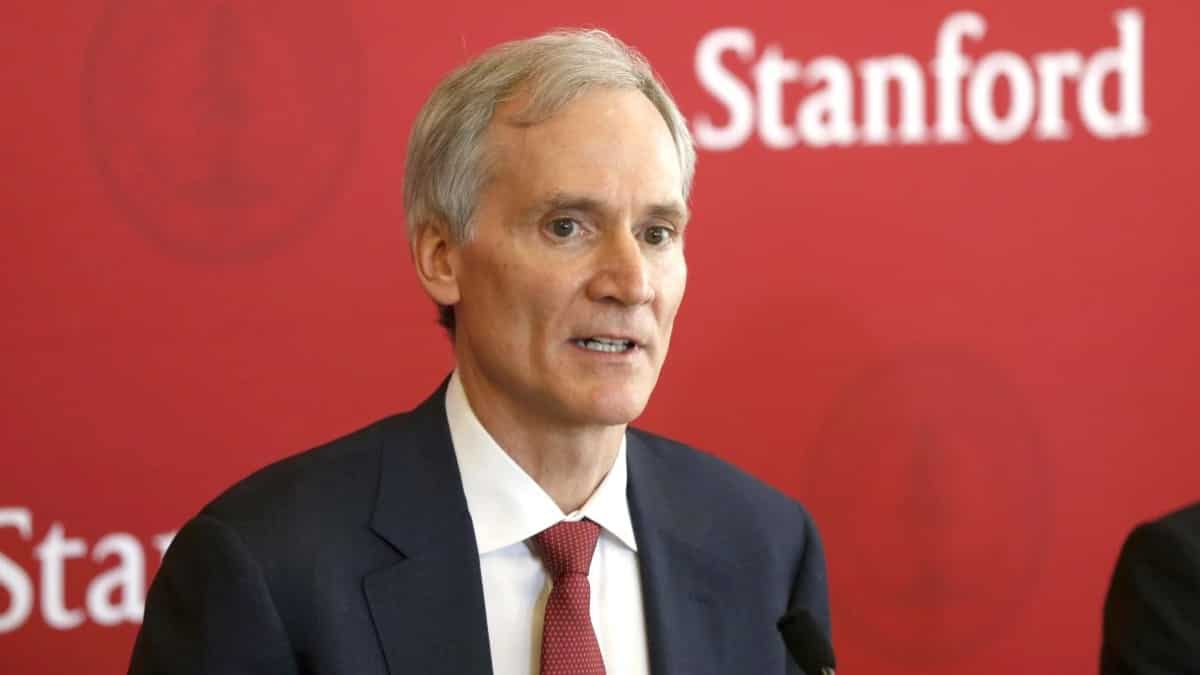
Stanford University President Tessier-Lavigne.
Stanford University President Marc Tessier-Lavigne announced that he will submit his resignation after concerns over the integrity of his research were raised. Tessier-Lavigne announced that he will be stepping down.
In a letter to staff and students on Wednesday (July 19), Tessier-Lavigne stated that he is stepping down because he thinks there will be a continued debate around his ability to head the university.
“I’ve never submitted a scientific paper without firmly believing that the data were correct and accurately presented,” the president said.

However, he accepted that he should have been more diligent in seeking corrections related to his work.
ALSO READ |Research discovers repair process that fixes damaged hearing cells
The announcement was made after the board of trustees of the historic university, which is often called the “Ivy of the West” and is located in the heart of Silicon Valley, started reviewing allegations of ethical misconduct and fraud around papers which were authored or co-authored by Tessier-Lavigne last year.
)
Trump announces 200% tariff on generic drugs: Here's what it means for 'Pharmacy of the World' India
)
FBI arrests alleged $547mn medicare fraud fugitive after 3-year global manhunt
)
'What is wrong...': Anna Hazare breaks silence on Sonam Wangchuk's protest, makes an appeal to Centre
)
'Criticising him after two or three matches isn't justified': Sikandar Raza backs Vaibhav Sooryavanshi
)
UP BTech gold medalist dies by suicide after failing in nearly 50 govt job attempts, leaves note for father
)
‘Centre had no interest in having a debate’: LoP Rahul Gandhi demands resignation of Dharmendra Pradhan, Amit Shah
&im=FitAndFill=(700,400))
World's top 7 most liveable cities in 2026 — Check where India and Pakistan stand
&im=FitAndFill=(700,400))
Why US fighter jets use seamless bubble canopies compared to Russian jets
&im=FitAndFill=(700,400))
New OTT releases this week (July 20-26, 2026): Musafir Cafe, Adarsh Baal Vidyalaya, 72 Hours- 5 new titles coming on Netflix, Prime Video and more
)
Preity Zinta backs Sonam Wangchuk and CJP student protests, urges activist to end fast
)
‘He's the architect of the genocide against Palestinians’: Mamdani repeats Netanyahu will be arrested if he visits US
&im=FitAndFill=(700,400))
FIFA World Cup 2026 team of the tournament: The best XI that ruled football’s biggest stage
)
'We acted immediately...': Indian PM Modi breaks silence on paper leaks as NEET protest, calls for Education Minister's resignation grows
)
Salman Khan breaks silence on health concerns after viral Mumbai appearance
&im=FitAndFill=(700,400))
'Eyes before weapons': How the S-400's radar network works
)
'This should not happen in a democracy': Shashi Tharoor slams detention of Rahul Gandhi, Priyanka Gandhi after protest outside PM Modi's residence
&im=FitAndFill=(700,400))
Meet top 5 batters with most runs in India vs Zimbabwe T20Is
)
'There is no need for...': PM Modi takes a veiled dig at Rahul Gandhi, sends big message amid Parliament March
&im=FitAndFill=(700,400))
Why the F-22’s cockpit glass is thicker than a standard fighter jet
&im=FitAndFill=(700,400))
2026 FIFA World Cup awards: Full list of Golden Boot, Golden Ball, Golden Glove and every major winner
)
Indus treaty can no longer function in its current form, says India; plans 5,500 mw of new J&K hydro projects
)
JP Nadda, Jitendra Singh meet Sonam Wangchuk at Medanta Hospital: Report
)
3.5-million-year-old mystery creature found in Japan is a 'giant' never seen before
)
YouTube cracks down on AI slop, but didn't it help create the monster? Your channel will be demonetised if...
)
Donald Trump heading for a tough midterm elections as approval ratings fall
)
Student union leaders call off hunger strike at Jantar Mantar after civil society appeal, but protest continues
)
'Guru is the...': Indian Education Minister Dharmendra Pradhan shares message on education amid calls for his resignation
)
Sonam Wangchuk's connection with George Soros and Ford Foundation explained!
)
'George Soros playbook': Understanding the foreign funding network around Sonam Wangchuk
In the review, 12 papers that Tessier-Lavigne had worked on were assessed, which included five in which he was the principal author.
The allegations of misconduct in the work were first aired on PubPeer, which is a website where scientific community's members discuss their research paper, stated the final report of the panel.
Serious allegations against president cleared
The most serious allegation against the president, which was the fraud investigation carried out on a 2009 paper on a model of neurodegeneration published in the scientific journal Nature, was cleared by the panel. Neurodegeneration models can have great potential for research and therapy of Alzheimer’s disease.
The panel ruled that they did not discover any fraud in the research papers. However, they concluded that the paper had multiple problems, which included a lack of rigour in its development. They added that the research that went into the paper and its presentation had “various errors and shortcomings”. No evidence of Tessier-Lavigne being aware of the lack of rigour was found by the panel.
WATCH |Gravitas: China builds a new research port in the South China Sea
“People tend to think of scientists as these individuals that they’ve heard of like Einstein and Marie Curie,” stated H Holden Thorp, editor-in-chief of the Science family of journals. “The truth is that researchers run laboratories filled with people, and everything that happens in that laboratory is a product of many individuals there," he added.
Even though Tessier-Lavigne was cleared of research misconduct by the report, Thorp said that the boss is ultimately held responsible for what takes place in the lab and shouldn't get distracted by doing other jobs. The panel discovered that “the unusual frequency of manipulation of research data and/or substandard scientific practices” suggested a requirement for improved “oversight and management”.
You cannow write for wionews.comand be a part of the community. Share your stories and opinions with ushere.
WATCH WION LIVE HERE